Friday, October 02, 2009

Sorry, Tarantino


Inglourious Basterds was released today in cinema halls in India. Being a big fan of Quentin Tarantino, I went and saw it on the first day, and was hugely disappointed.

It was a good entertainer -- a typical Hollywood one at that -- which glorifies America/Americans. Like Independence Day, or even like James Bond movies. It is also a plain revenge movie. It does not really have anything that makes it special. Not in its content, not in its presentation. I wouldn't mind a 'plain' revenge movie from Tarantino (he has already done a lot of experimentation with presentation in his previous films, so it is ok if he just wants to tell a linerar story). But when the 'heroes' are Americans and also Jews, and when it comes out in 2009, I find it very very American and very very Israel.

The film also glorifies all the cruelties done on any German, and the audience is thrilled at every such act of cruelty on screen. There were people who said this is an intelligent film that makes fun of the war films and what not. I do not find much difference between them and Hitler (character in the film) watching German soldiers' war heroics on screen and saying this is superior filmmaking.

Sorry, Tarantino. You are better remembered for Pulp Fiction and Kill Bill. Or even for Death Proof. Or that one episode of Four Rooms.

Thursday, September 10, 2009

Irate mobs and Arushi


Raj Kumar died of shock.

It seems "certain influential people of the area forced him to climb a tree on Saturday evening and cut a branch that was entangled in a high voltage wire."

Yet another 'accidental' death of a field laborer. He did not have insurance policies.

An English newspaper reports it : Cops beaten up by irate mob. Most probably the first and last newspaper report on this death. [Thanks to Anu and PSB for sharing this story. I would not have noticed it otherwise.]

Similar was the story of a maid who was apparently butchered by her employer to please the gods last year, in the luxurious Green Park residential area in South Delhi. Maids and servants sat in front of that house in protest. It seems that same person had done this with another maid about an year before that. Police pacified 'irate mob' and cleared the place. Don't know what happened after that.

I see Arushi's [see footnote] photograph on the front page of a newspaper today, once again after a few months.

* * *

[Arushi Talwar : One girl from Noida whose face was on the front pages of newspapers for months together. Needless to say, she was from a well to do family. It was interesting : the first day newspapers carried the news of her death, and said a servant is the main suspect. Next day they figured out that the 'suspect' was also murdered. Police then said her father killed them both. Then it became big news. People came out on streat, demanding justice. TV channels made merry, ran stories one after the other, came with new theories every day. Finally, one day we heard that some 'Nepali' servants did it. Everyone was happy. There was no follow-up news in any newspapers. TV channels turned their camera away from Talwars finally. The only people to raise a meek voice of protest was some Nepali associations. End of story, for all practical purposes. There will be some reference once in a while, some nostalgia. After all, a lot of people -- both storymakers and followers -- lived on this one story for a very long time.]

Friday, July 31, 2009

Bewakufi in double role


That is what we get when Imtiaz Ali decides to play by the rules.

So let us count some of the rules.

Rule number one. When the hero and heroine break-up, both of them will make sure they will hook up with the dumbest woman and most boring man respectively.

Two -- Love happens once in life. (Proof: that dumb woman and the boring guy in rule one).

Three -- Rishi Kapoor has taken his second life as an actor to teach the younger generation the meaning of love. (Don't know how many more times we will have to tolerate him!)

Four -- Bewakufi is what characterizes real love. (The 'kal' hero says, "Mujhe pata hai ye bewakufi hai". The 'aaj' hero takes it too seriously.)

The count could go on.

On the plus side, Deepika has got a good smile and she knows it. She is awesome in happy scenes. Ok -- she is sad in sad scenes, but those scenes are sad anyway.

Saif shows glimpses of brilliance once in a while, both in happy and sad scenes. I particularly loved the scene where his pressure builds up taking to Rishi Kapoor Paji about Meera seeing someone in India.

And the film has got some wonderful posters.

["Imtiaz Ali, one of the most promising filmmakers in the country, is sadly down with blockbusteritis", one reader wrote in the comments section of rediff review page. When there is so much money running on his film, one can not expect a Socha Na Tha. But I expected a more sensible blockbuster, say something like an OSO.]

Wednesday, July 29, 2009

Between a Father and a Son


What is that? (Τι είναι αυτό)

Father and son are sitting on a bench. Suddenly a sparrow lands across them..

A greek short film, by Constantin Pilavios (2007).

Thanks to Bobby and Rajeev for pointing me to this film. Apologies to Resmi, who did not know about this film and was planning to make one on similar lines.

[The content may be copyrighted. The video embedded here is from youtube.]

Friday, July 24, 2009

A Simple Solution to Delhi's Parking Woes


"People unnecessarily complain that there's shortage of parking space in Delhi.. Everyone has a tree in front of their house. If they could get rid of it, there's more than enough space for all the cars.."

The driver who said this was serious. I found it funny, but could not laugh in front of him. Later I laughed my heart out, sharing this joke with friends.

But then, it is just a matter of choice. You decide whether you want that third car (or second, or fourth.. quite common in Delhi class families) or that tree in front of your house. Simple.

[image : sudeep]

Tuesday, July 21, 2009

Hi-caste lo-caste we no want all..!


High class low class we no want all
Everyone equal and god decide all..


I am reminded of that early 90s (was it Apache Indian?) song when I hear people say "everyone is equal", and all that matters (and should matter) is merit. Treat everyone equally, and that ends all discrimination in the world. Some more romantic ones go on to add that "Love doesn't see caste and religion." I used to think so too, at least for some period in my life. So I feel obliged to write this.

* * *

[Achnowledgments: A first draft of this write-up happened as a comment at one blog post by Ratheesh, and I used a slightly modified version while commenting on another post, by my friend Maymon. I strongly recommend going through Maymon's post and a comment there by Anu in response to it. I am thankful to Amit and Vinita whose comments there inspired me to work on this. Even now it looks incomplete -- you are welcome to take it up from here and add your share. Thanks in advance.]

* * *

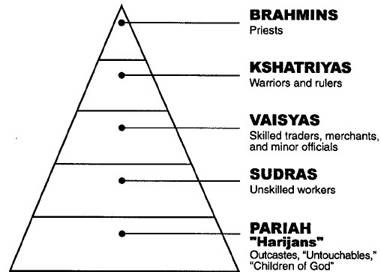
Like in many Keralite 'Communist' families, I was also brought up with a belief that caste did not exist in Kerala any more. But as I grew up, I could smell the rot around. I heard even progressive people in my close surroundings (who I respected otherwise) making fun of a `parayan' or `pulayan' who got to a position of power (in the recent past there was a critique of an old Malayalam short story by C V Sreeraman on similar lines.)

I have the advantage and disadvantage of having born into an 'in-between' caste (OBC) and growing up in a fairly backward village/town in Kerala. In my school and college I had many friends from dalit and other backward communities, but when I went to engineering college, the difference was stark. `Quota' people suddenly became outsiders. I felt bad about it, but I could not escape it.

[image courtesy: People and Politics Worldwide India]

During my M.Tech. time I was shocked when a friend's mother (who is also very `progressive') advised me that it is ok to find a girl of your choice, just make sure that she is not a pattika or kazhukkol. (In Malayalam, scheduled castes/scheduled tribes are `pattika jathi/pattika vargam')

Even as I felt shocked at that comment, I realized that the way our society is designed, it is unlikely that I'd go for a pattika. (I had a crush on a fair Iyengar girl at that time). Even my dalit male friends have complained that it is difficult to find a good girl in their community, because they are all dark. Even in Tamil films, the heroine is essentially of the fairer kind even as she sings `Karupputhaan enakku pidicha kalaru` ('black is the colour I like..' as you'd have guessed, the hero is dark).

I still work with such issues internally, even though my beauty concepts have changed quite a lot over years. ('Karinguttayi' was one deregatory reference to colour -- used only to refer to the parayan or pulayan -- that has stayed in my memory from the childhood days.)

It is not just the skin colour -- I, like many others, often ended up judging people ('discriminating' is a bit too harsh, I know) based one one's fluency in English (or language in general), staying `calm' in a debate, even the confidence levels with which one speaks. (These qualities come much easier to those who are born in `upper' castes. That also I realized much late in my life, thanks to the `non-discriminatory' childhood. Not that I have completely stopped my judgements.)

It has not been easy working on the discriminatory elements in oneself, and trying to find out how others work on it. One may not have the energy for that always, but I have tried that whenever I could. People do change over time. Even if I am most comfortable with people from same/similar communities.

It is not that I have something against others. But at times, we can feel the distance. For instance, one person asked after reading Maymon's post: 'Lol! This guy does not want to reveal his identity, then why does he support reservations based on that identity? Thats what I understood after reading this post..' (I am not making this up).

How all can we address this issue in public spaces is sure complicated. A lawyer friend was saying in their law college in Bangalore, they fought and achieved a system where the names (of reserved category students) were not listed separately. It is debatable how much would that help. I feel it is more important to bring about an awareness that reservations are not a favour that we (when I speak as an `upper caste') do to some people, it is something that is essential and beneficial to all of us in many ways.

[Shall I say, to be continued..?]